

I wrote this essay for the Edge City blog to close out the year for our community. Sharing it here as well because it’s a good summary of how my thinking about the project is evolving. Going forward, I’ll be posting more things separate from what you’ll see on the Edge blog, starting in January (so it makes sense to be subbed to both ;) . Thank you for a great year, and see you in 2026 ☀️
As Edge City approaches its second birthday, we find ourselves in the middle of an exciting transition.
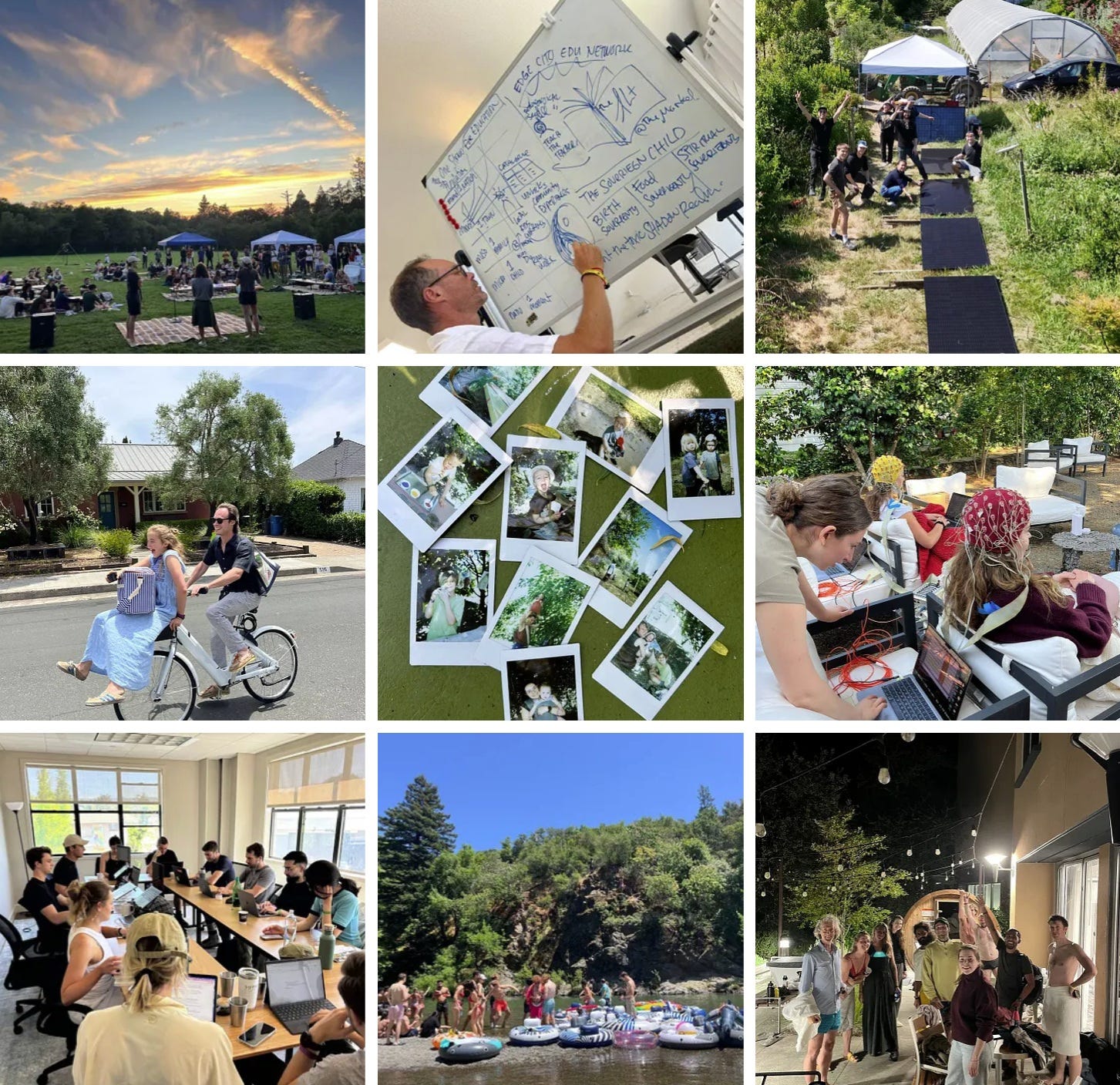
The early days of Edge were about proving we could create something new: month-long popup villages where scientists, technologists, artists, and builders live and work side by side. Environments designed for health and serendipity, where new ideas for society can take root. Multi-generational communities where kids run around while their parents prototype the future.
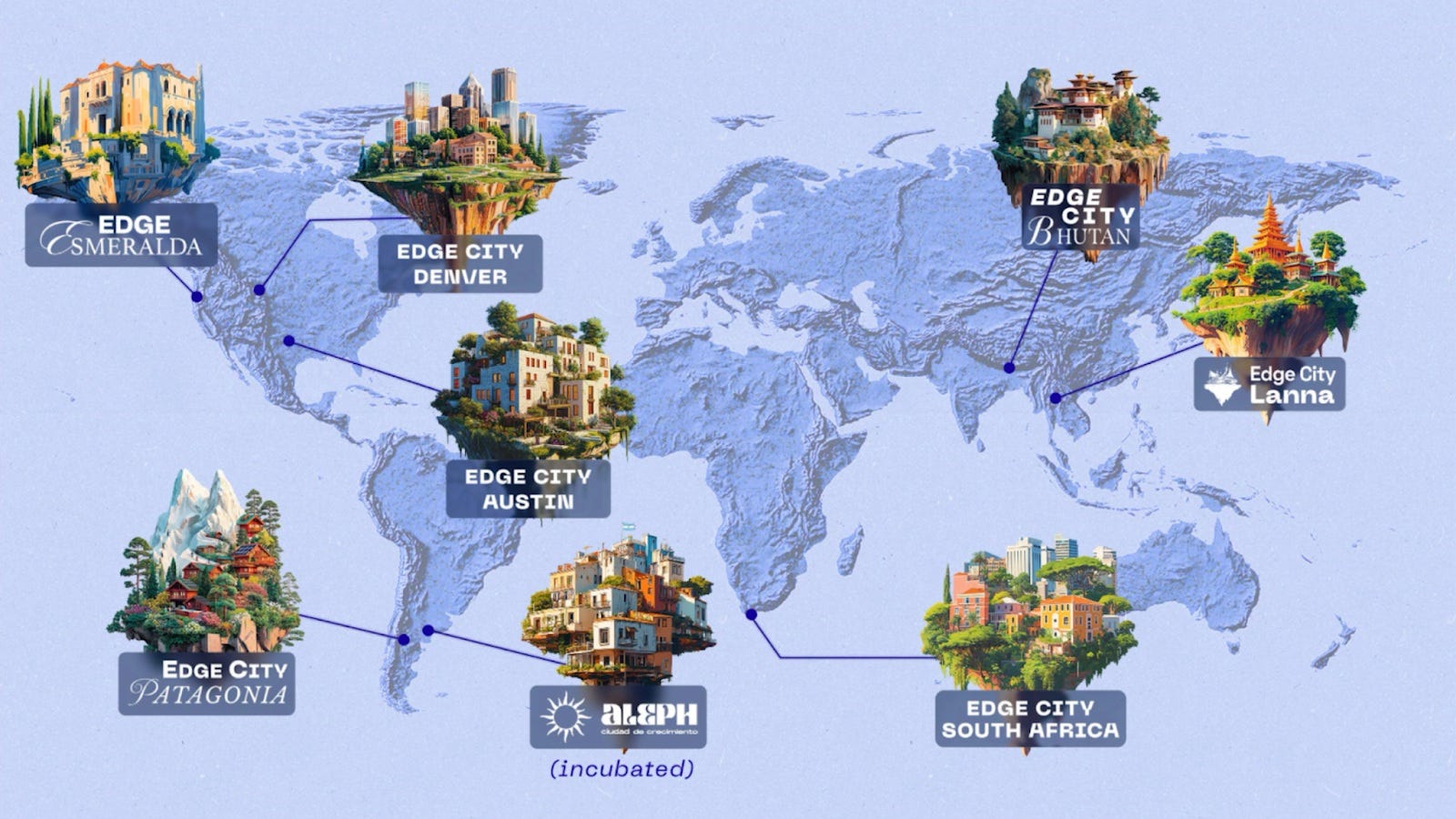
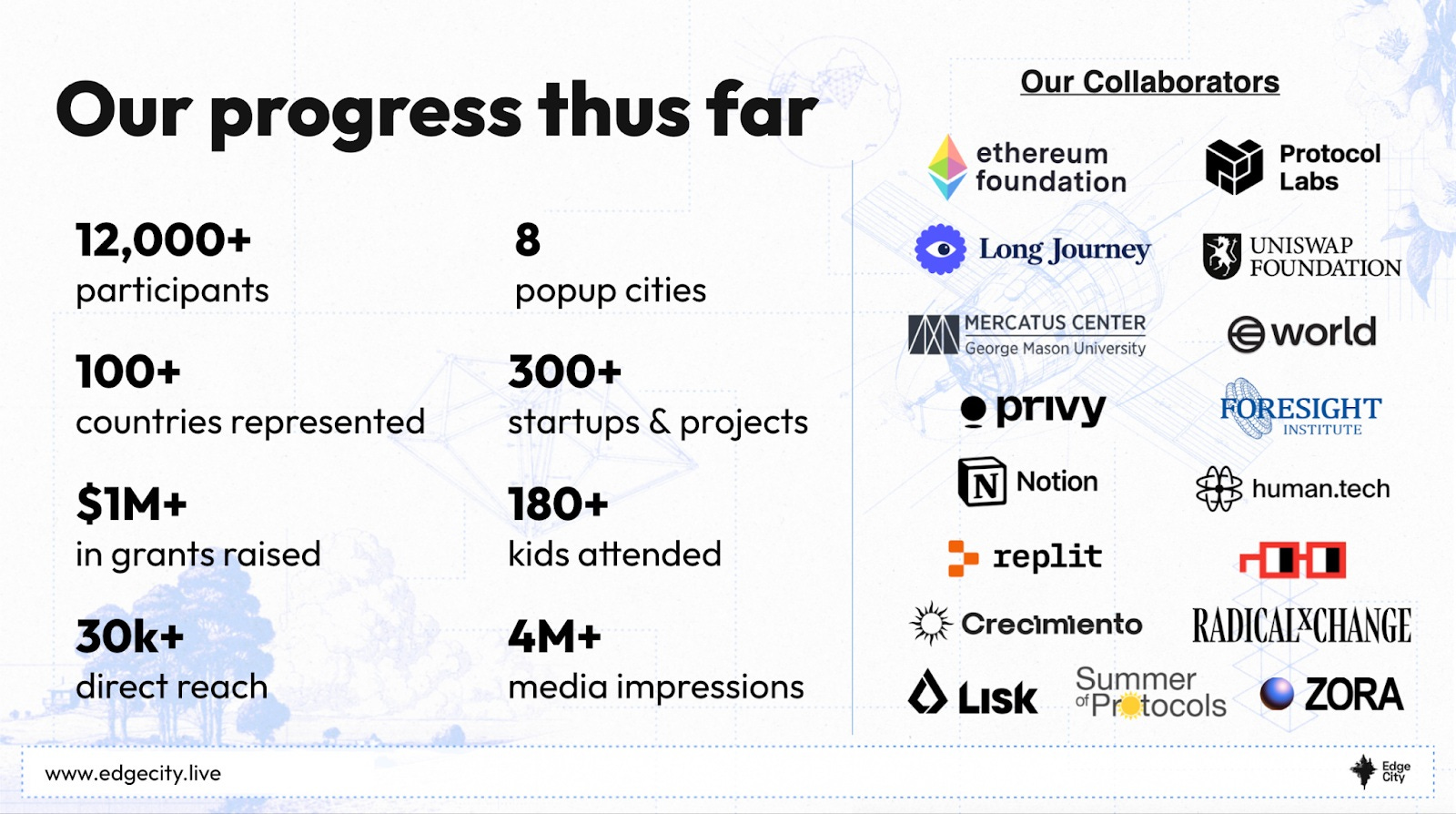
We proved we could build that. Over the past two years, we’ve hosted gatherings for thousands of participants across four continents, welcoming builders and families from 100+ countries.
We’re now shifting our attention to what actually gets built inside these environments; the incubator side of society incubator. The experiments are working, the community is deepening, and increasingly, real things are emerging.
This letter shares what we’ve learned this year and where we’re headed.
What We Built in 2025
In February, we published the Edge City Roadmap: a six-stage vision for how popup villages can evolve into a global network of innovation hubs. Then we got to work building it.
Our 2025 gatherings:
Edge City Austin (March 2–7): A six-day gathering of 300+ builders the week before SXSW, setting the stage for our year.
Edge Expedition: South Africa (April 3–12): A ten-day intensive exploring Cape Town’s tech ecosystem. We visited township internet projects, AI-enabled schools, biotech labs, and university innovation hubs. We evaluated the region as a potential site for a future full popup village.
Edge Esmeralda (May 24–June 21): Our second year in Healdsburg, California. 850 residents from 66 countries. 80+ kids. Four weeks of building and experimenting, with dozens of projects and startups coming out of it.
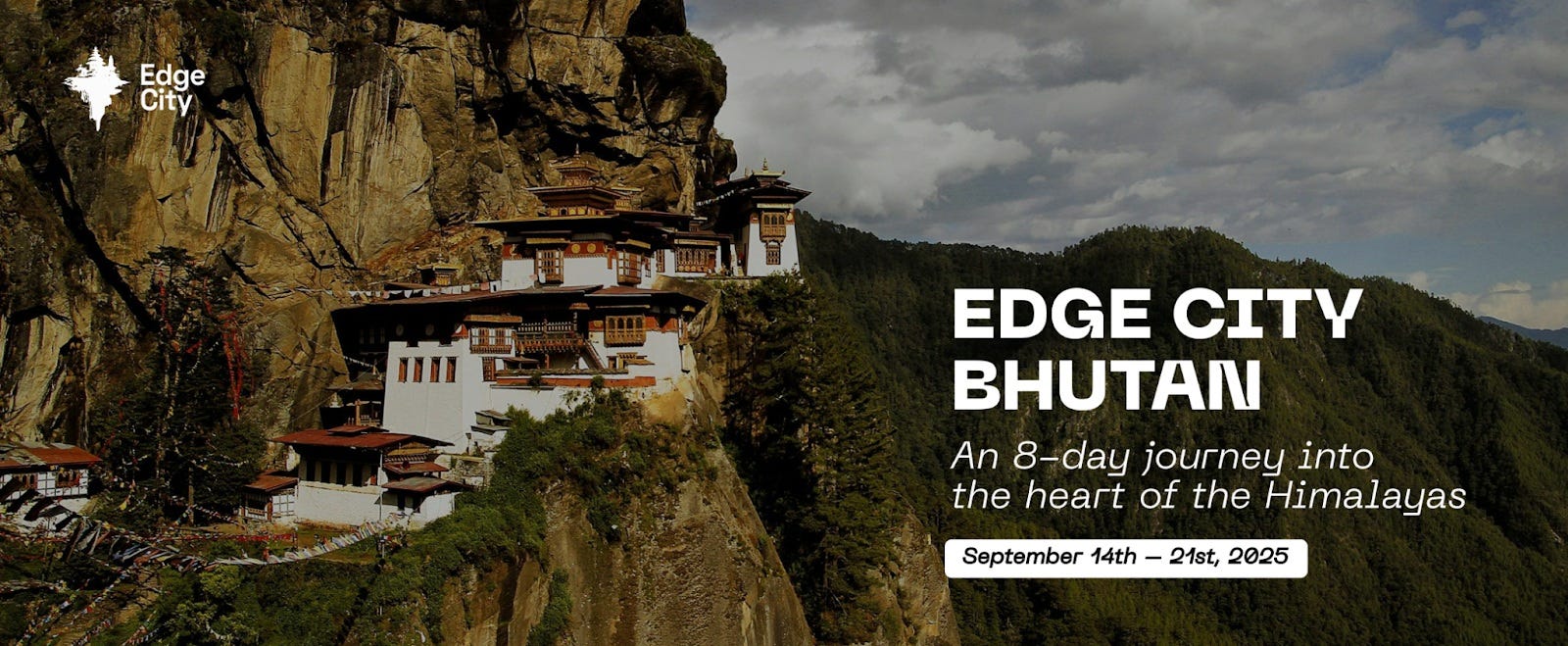
Edge Expedition: Bhutan (September 14–21): We hiked to Tiger’s Nest Monastery, spent a night at Dodedra Monastery, and visited Gelephu Mindfulness City, a pioneering urban project building spiritual infrastructure before commercial infrastructure. We held an Ideas Exchange with government officials and began conversations about youth mentorship and a potential Consciousness x AI Lab, exploring how contemplative traditions might inform the development of artificial intelligence.
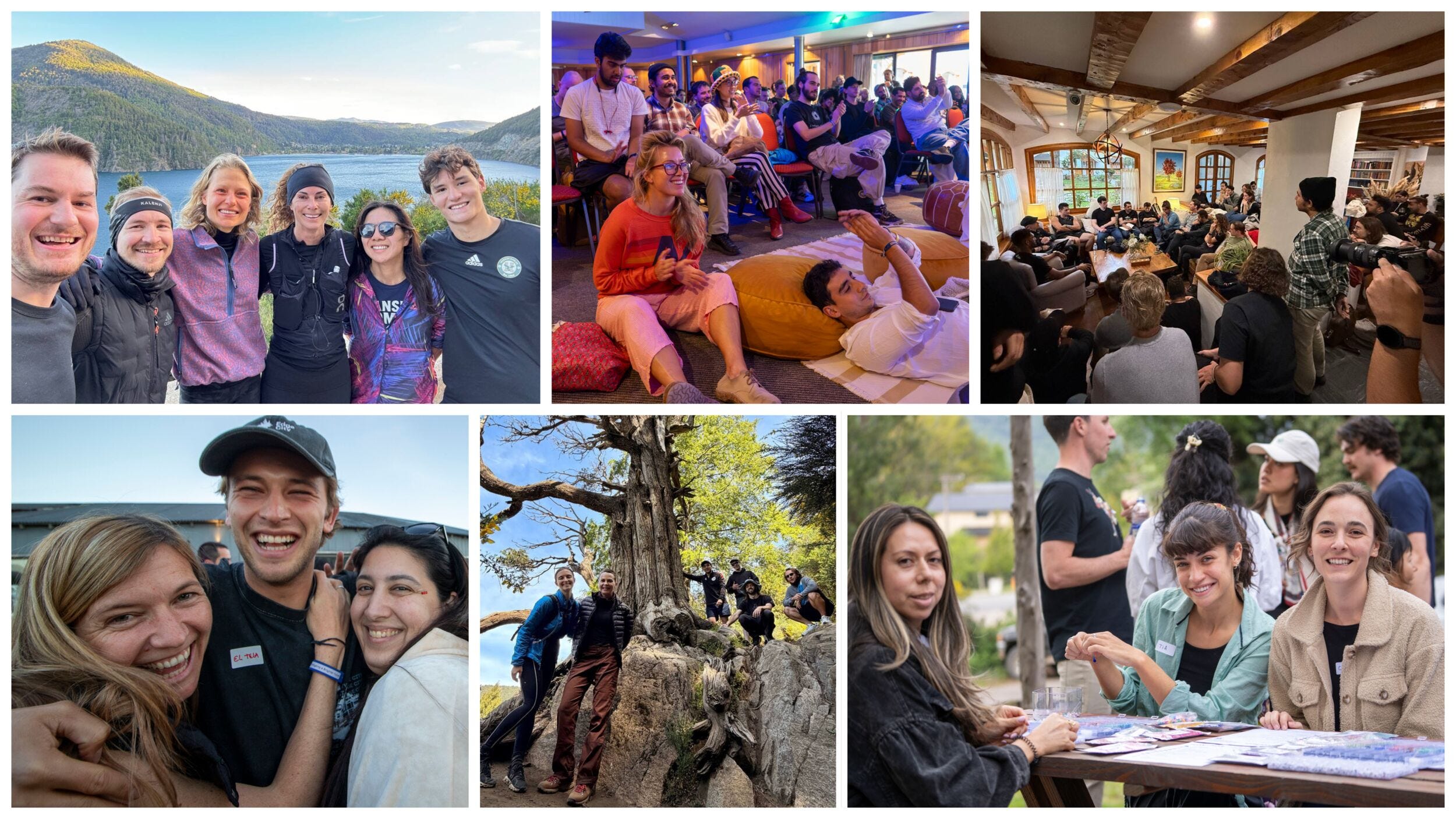
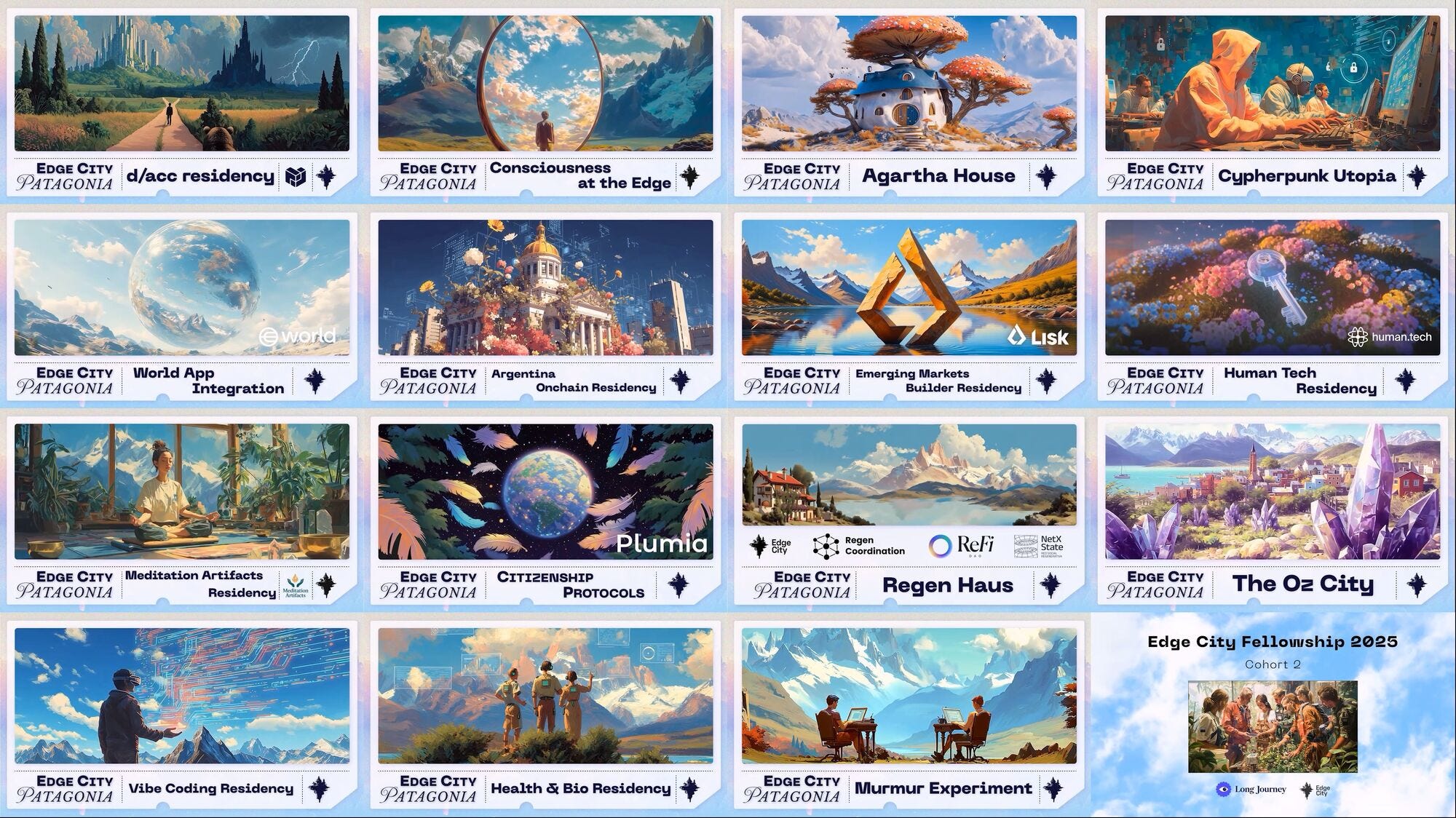
Edge City Patagonia (October 18–November 15): Our first full popup village in South America. 600+ participants from 72 countries gathered in San Martín de los Andes, a lakeside town in the Argentine Andes. Eleven thematic residencies anchored the village, from Protocol Labs running d/acc experiments to the Ethereum Foundation building their Open Intents Framework program.
From Container to Catalyst
Thus far, Edge City has primarily been a container; a well-designed environment where good things emerge. Going forward, we are leaning more into being a catalyst: actively shaping, funding, and accelerating what emerges.
We see five general categories of projects that we’re helping to build.
Startups
Edge City has begun to serve as a launchpad for new ventures. Constellation offers a prime example: at Edge Esmeralda, this neurotech experiment evolved into a venture-backed startup, collecting neural data on-site while closing their lead investor and building their founding team.
Shawn Fanning (founder of Napster) and Andrew Frame (founder of Citizen) soft-launched their stealth startup Ami, using the village as a live testbed. Several Long Journey Residency participants left with funding commitments or pivotal introductions that shaped their trajectories.
We’re excited to continue to support the next generation of startups, and have recently made a hire that will accelerate these efforts (more info below).
Applied Research
We’re bridging academic theory and real-world application. Vasocomputation started as a living room talk at Esmeralda and sparked a multi-day consciousness track, leading to multiple grants and a six-month engineering trial, and recruiting several Edge participants.
Keoni Gandall built a DIY biotech lab from scratch and ran live DNA experiments on-site, culminating in CRISPR-edited bread. Ben James constructed a solar-powered GPU datacenter to support compute-intensive research. These experiments are running in live community environments, with real feedback loops and real stakes.
Field Building
We see nascent movements starting to build their early support bases at Edge. One example is the d/acc movement; we partnered with Vitalik Buterin and Nodes to launch SHIFT Grants and deployed $400k to builders working on privacy, information resilience, and decentralized infrastructure. We also hosted the d/acc Residency in Patagonia in partnership with Protocol Labs. Other examples of early fields represented well at Edge include: Plurality & Digital Democracy, Network Socities, Consciousness & NeuroTech, Regenerative Living.
These are early signs of Edge City’s role as a coordination engine for the ‘pre-institutional’ phase of new movements. By providing a physical base for these nascent ideologies, we help turn abstract philosophies into legible, funded, and collaborative roadmaps before the rest of the world know they exist.
New Towns and Cities
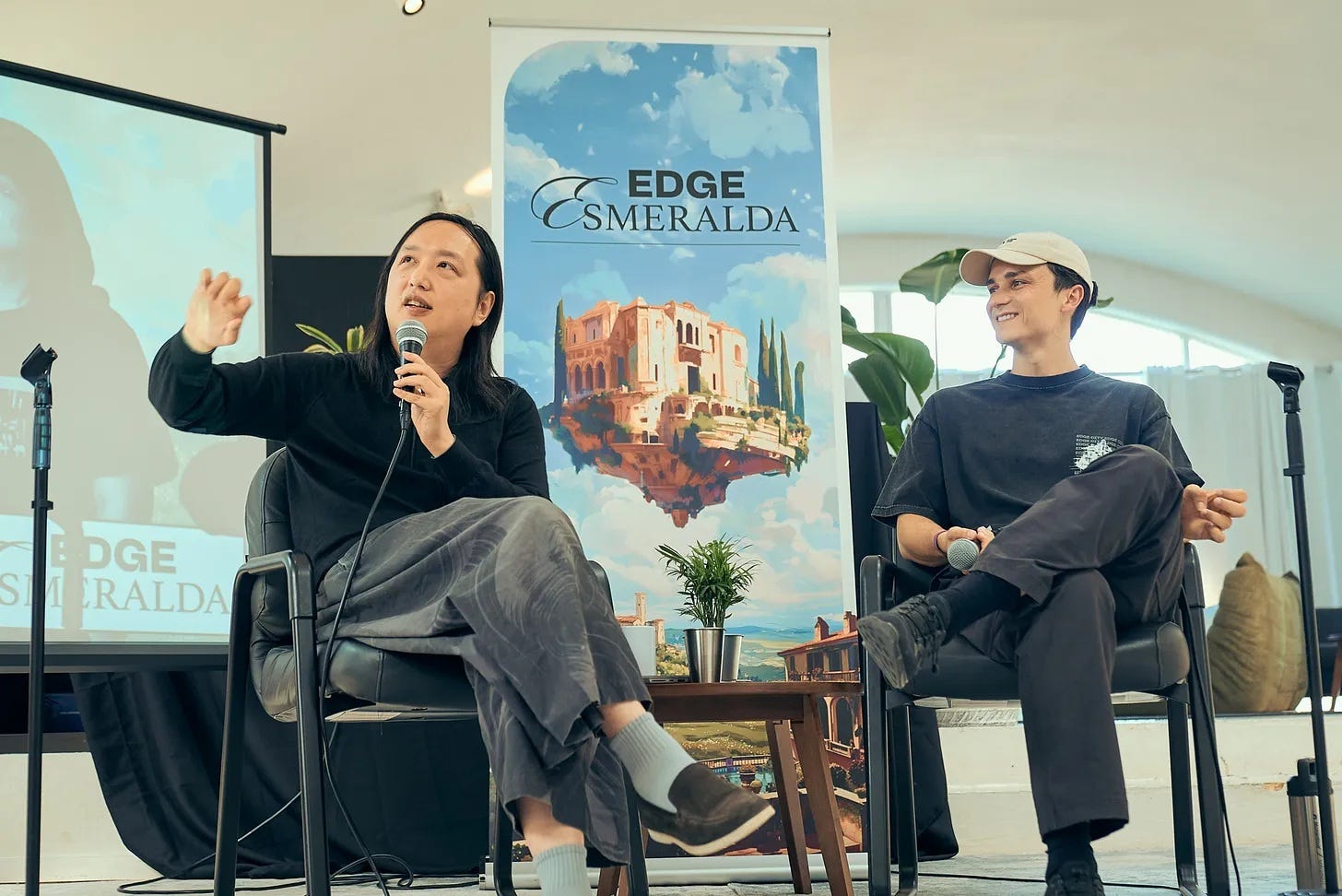
Edge Esmeralda is co-organized with Devon Zuegel and the Esmeralda Institute, a new permanent town project north of San Francisco. Our popup village serves as a living prototype, testing ways of living and working together before they get built in concrete.
In Bhutan, we began conversations about longer-term collaboration with Gelephu Mindfulness City. We see Edge City as the place where the “software” gets developed for the “hardware” of new cities: the culture, norms, and governance systems that make a place actually work.
Directly Supporting Young Builders
The Edge City Fellowship supports emerging builders (ages 18–25) with a full-ride to attend Edge City and spend a month surrounded by leading builders and thinkers.
This year’s cohort explored neuroscience, AI governance, and decentralized systems. Highlights include Brian using AI to solve an ”unsolvable” math problem and Maxwell hacking the system to enable locals to remotely calibrate their hearing aids - all while closing a multimillion-dollar grant from NVIDIA.
Inflection Grants provided $2,000 micro-grants to early-stage builders, from a high schooler designing drug-delivery microrobots to a founder building mobile birthing clinics in rural India. We believe in funding people unusually early, when a small push can change a trajectory.
“What makes Edge special is its capacity for experimentation. You are free to try unusual things, think in new ways, and find your tribe.”
“Edge was a great opportunity to get deep, focused work done — but also a chance to try new things, meet interesting people, and more deeply understand myself.”
Brian Kelleher, Founder Microdoc, applied AI & Systems Builder
Edge City Fellow, Patagonia 2025 Cohort
What We Learned in 2025
If 2024 proved that popup villages were possible, 2025 taught us that they are a powerful new form of social infrastructure for accelerating progress and the velocity of ideas.
1. The village compresses the build loop (Ideation -> Creation -> Iteration).
In a typical environment, the cycle from ideation to creation to feedback takes weeks. You schedule a call, send a deck, wait for responses. In the village, that loop collapses to days. Because we share meals, saunas, and living spaces, the barrier to passing ideas back and forth drops to zero.
The “preamble” disappears, and serendipity ensues. You sketch something at breakfast, build an MVP by the next day, and demo it at the Sunday Demo Days. The village is an engine for velocity.
2. Community becomes the first validator.
Usually, new ideas wait for permission (a grant, a VC check, university approval) before they are considered real. In the village, the community acts as the validator.
Projects such as Constellation and the DIY bio-lab didn’t wait for external approval. They launched because the immediate community provided the support, funding, testing ground, and moral encouragement to start. A high-agency community can replace the early-stage validation role that institutions used to play.
3. Residencies: Decentralizing the “Scenius.”
By empowering residency leads to anchor their own thematic tracks, we moved from being a hosted event to a true platform for co-creation. These leads brought specialized knowledge and creative energy that the core team never could have envisioned on our own. This shift turned participants into stakeholders with real skin in the game, creating a deeper sense of communal ownership.
We are incredibly grateful to the leads who took on this challenge; their leadership is what made the village feel like a living ecosystem rather than a programmed conference.
4. Small towns near nature make great hosts.
We keep finding that towns with natural beauty and seasonal rhythms are ideal for popup villages. San Martín worked because it had hospitality infrastructure, but it was in its quieter season. The venues were eager, the town was receptive, and there was capacity without overcrowding.
The pattern holds: places built for visitors, surrounded by mountains or water or forest, tend to welcome what we’re doing.
5. The intensity is the point.
Edge City is not a vacation. It’s an environment designed to stretch you.
The density of ideas, people, and possibilities can feel like a lot, and we’re realizing that that’s an important part of the experience. You choose how deeply you engage: some people come for a week, focus on their work, and meet a few people in the evenings. Others spend every waking hour in sessions, conversations, and late-night whiteboard sessions. Both are valid.
But the underlying premise is that challenge produces better work than comfort. The places that generate genuinely new thinking—certain labs, institutes, companies—do so because they demand something of the people who choose to be there. We’re learning to lean into that.
6. Large institutions are noticing
Governments and large-scale institutions are starting to pay attention. We’ve had serious conversations with city planners, economic development offices, and national governments, from Latin America to South Asia.
What started as a fringe experiment is beginning to look like a model worth studying. The question we’re now being asked isn’t “what is this?” but “how do we do something like this here?”
7. Serendipity keeps being off-the-charts, and we don’t fully understand why.
One of the most consistent patterns at Edge is people meeting exactly the person they needed. A founder searching for a specific technical co-founder runs into them at breakfast. A project that’s been stalled for months suddenly accelerates because of a conversation that happened by chance in the sauna. This keeps happening at a rate that feels statistically improbable.
We have some theories: the shared calendar, the AI-connection tools, the curation, the duration, the shared living spaces, and the fact that people are in exploratory mode rather than transactional mode. But we don’t fully understand it yet. It’s something we’re paying close attention to.
2026 and Beyond
Edge Esmeralda 2026 is confirmed for May 30 – June 27 in Healdsburg, CA. Applications are open now, and early-bird pricing ends January 15th, 2026.
Beyond California, our global roadmap is taking shape. We are currently scouting for Edge City India in Q4, and we are actively planning to return to Bhutan to deepen the collaborations we started this year.
We’re refining the residency model, investing in ecosystem support, and exploring new locations. If you’re building something that might benefit from a month in a popup village, we want to hear from you.
We’re also excited to announce a team update: to support this shift toward being an active player in how we accelerate builders, we’ve brought on Katherine Jones to focus on ecosystem building: tracking what emerges from our gatherings, connecting projects to resources, and helping innovations find their way into the world.
More announcements in the new year!

Why This Matters
Big things start small. When we look back at the movements that defined eras, they started quietly, in small rooms, with high-agency people who realized that the current way of doing things was no longer working.
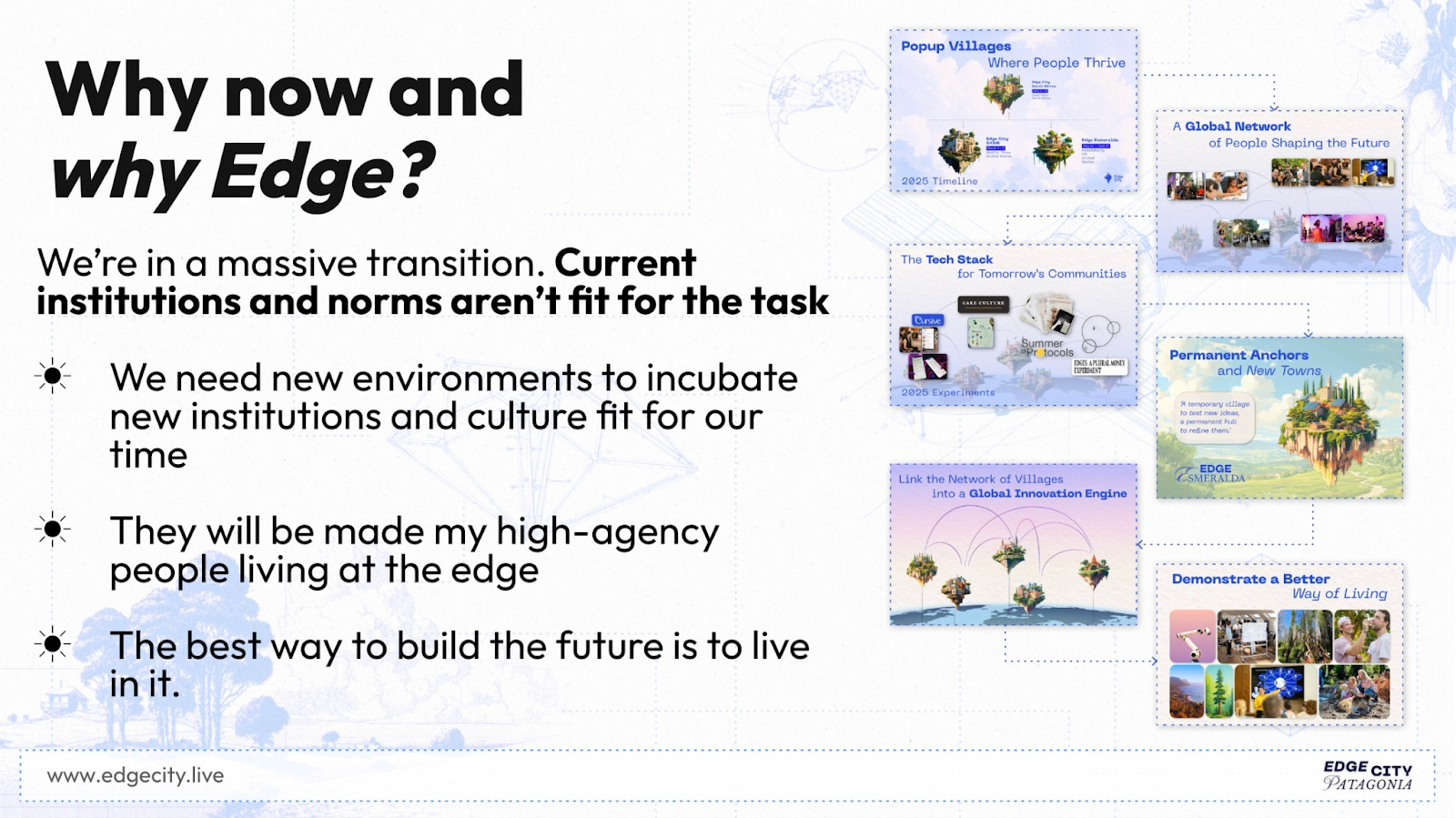
We believe we are living through a similar transition. The institutions and norms we inherited were designed for a prior world. We need new environments to incubate the culture and systems of the future.
Two years in, Edge City is still small. But we’re starting to see the outlines of something larger. We’ve seen people receive funding because of who they met at dinner. We’ve seen companies start in residency living rooms. We’ve seen researchers find collaborators, artists find audiences, and builders find courage.
As one participant put it: “Edge is where you go to meet people who might change your life forever.”
That’s what we’re building. Thank you for being part of it.
P.S. This year, our reach expanded beyond just the gatherings themselves; we crossed 10k followers on our X, entirely organically. We also started posting more on our Newsletter, LinkedIn, Instagram, and Farcaster. Follow us to stay updated and share with friends!
I‘m very excited to hear Bhutan is on the map again. I’m dying to go (and to learn more about Gelephu!) Any clue on what months youre looking at (so I can keep them open?)
I wonder if the serendipity thing is just that people don’t actively meet enough people.
Great to read an update. Keep going!